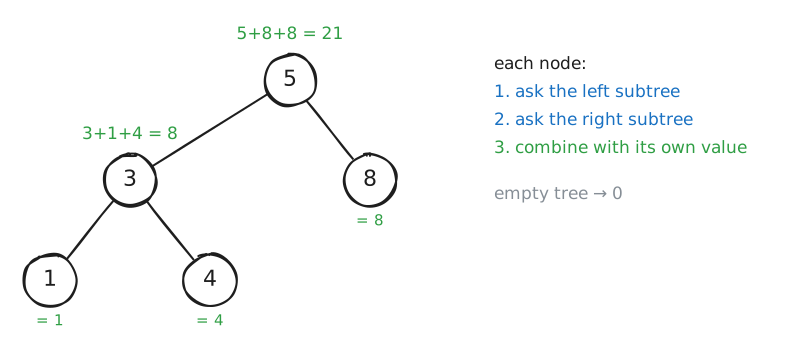
Almost every binary tree solution has the same shape. Once you see it, most tree problems become a matter of filling in two blanks: what does an empty tree return, and how do I combine my children's answers with my own value.
solve(node):
    if node is null:   return the answer for an empty tree     <- base case
    left  = solve(node.left)                                   <- trust it
    right = solve(node.right)                                  <- trust it
    return combine(node.val, left, right)
The hard part is the middle two lines: you have to trust that the recursive calls return the right answer for the subtrees, without tracing them in your head. That isn't magic — it's induction. If solve is right for smaller trees (and it's right for the empty tree), then combining their answers correctly makes it right for this tree too.
Free account
Sign up to read the rest of this lesson: 5 more sections, 2 drawings, a dry-run simulator and code in JavaScript, Python, Java and C++.
Still to come