The problem. Design a stack that supports push(x), pop(), top(), and also getMin() and getMax() — the smallest and largest values currently in the stack — with every operation in O(1) time. pop, top, getMin and getMax are only called when the stack is non-empty. (LeetCode's Min Stack is this problem with only getMin; Max Stack adds more operations, but its core is the same idea.)
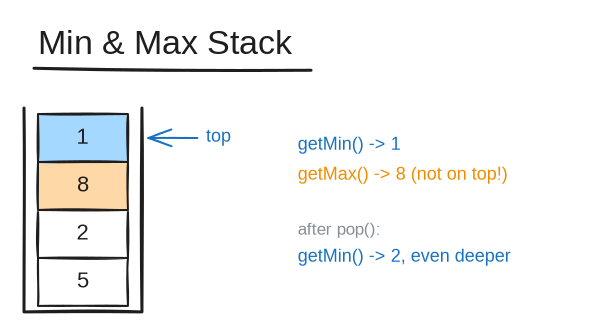
push(5)  push(2)  push(8)  push(1)
getMin() -> 1    getMax() -> 8
pop()            // removes 1
getMin() -> 2    top() -> 8
The minimum and maximum can be anywhere in the stack, and they change back when items are popped. The trick is to remember what the min and max were at every height of the stack.
Members only · free account
The rest of this lesson, with 5 more sections, 2 drawings, a dry-run simulator and code in JavaScript, Python, Java and C++, opens with a free account.
Not ready yet? The Arrays course is free to read, no account needed.
In the rest of this lesson